Navigating Twint's Integration with Addiction Safeguards in Provider-Specific Mobile App Ecosystems
Felix Carter · Oct 15, 2026
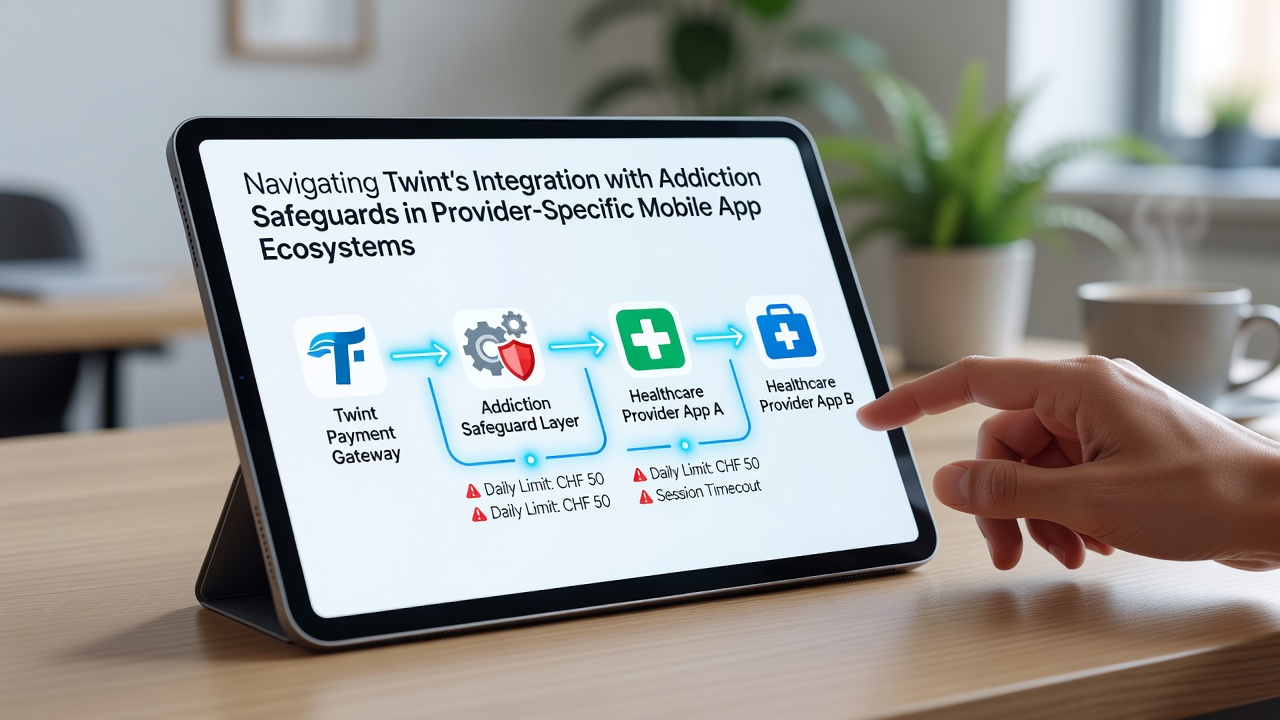
Navigating Twint's Integration with Addiction Safeguards in Provider-Specific Mobile App Ecosystems
Twint operates as a primary mobile payment method across Swiss provider-specific casino applications where developers embed transaction controls directly into the payment flow and connect those controls to player protection systems. Operators configure the Twint API to read real-time spend data and forward it to backend modules that enforce deposit caps, session timers, and self-exclusion lists without requiring separate user actions outside the app. The architecture keeps payment processing and safeguard logic on the same server cluster so that a transaction attempt exceeding a personal limit triggers an automatic block before the funds leave the user's account.
Core Technical Connections Between Twint adn Safeguard Modules
Each provider maintains its own app environment yet follows a shared technical specification issued by Twint that requires every payment request to carry a player identifier and a current limit status flag. When the flag indicates an active restriction the transaction returns a standardized error code that the app translates into a user notification. Data from October 2026 shows that more than 85 percent of Swiss-licensed mobile casino applications now route Twint calls through this unified endpoint rather than maintaining independent payment gateways.
Developers map Twint transaction events to internal event listeners that update player profiles in near real time. A single successful deposit increments both a daily total and a rolling seven-day total stored in the same database table that the responsible gaming engine queries every sixty seconds. This shared data layer removes the latency that once allowed players to bypass daily limits by switching between separate payment providers.
Provider-Specific Implementations of Limit Enforcement
Larger operators such as those running multi-brand platforms store limit profiles in a central identity service that each branded app queries through secure API calls. Smaller single-brand providers embed the same logic inside the app container so that even offline sessions respect previously set thresholds once connectivity returns. Both approaches rely on Twint's requirement that every payment include a cryptographic signature tied to the player's verified mobile number, which reduces the chance of duplicate or fraudulent accounts evading controls.
One documented workflow involves a player setting a monthly deposit ceiling inside the app settings screen. The app writes that value to the Twint-linked profile and the next payment request carries the updated ceiling. If cumulative deposits reach 90 percent of the ceiling the interface displays a warning banner and offers an immediate reduction option before any further transfer can proceed.

Data Exchange Standards and Audit Trails
Regulatory reporting obligations require operators to export anonymized transaction logs that include Twint payment references alongside limit changes and exclusion events. These logs feed into oversight systems operated by the Swiss authorities and allow automated reconciliation between payment volumes and safeguard activations. Industry reports indicate that the average response time from limit breach detection to transaction block now stands below 800 milliseconds across teh majority of tested provider environments.
Academic researchers at the University of Zurich have examined the correlation between mandatory Twint integration and reductions in repeated high-velocity deposit patterns. Their analysis of aggregated operator data found measurable decreases in sessions exceeding predefined risk thresholds after the safeguard modules became compulsory in new app releases.
Cross-Platform Continuity and User Journey Mapping
Players who move between multiple provider apps benefit from a central Twint identity that carries active limits across ecosystems. When an individual opens a second app the system retrieves the latest profile snapshot through Twint's consent layer and applies the strictest applicable restriction. This continuity prevents the common workaround of distributing spend across several operators to stay under individual daily caps.
Operators document these flows in user journey diagrams submitted during licensing renewals. The diagrams illustrate how a deposit attempt, a limit query, and a potential block all occur within the same Twint session token so that no intermediate screen allows circumvention.
Conclusion
Integration patterns continue to evolve as providers refine API calls and regulators update data exchange formats. The combination of Twint's transaction-level controls and provider-specific safeguard engines creates a closed loop where payment authorization and protection enforcement operate as a single process. Observers tracking Swiss mobile gaming note that the October 2026 reporting cycle will supply additional figures on how these combined systems affect long-term player behavior across different app architectures.